Placental Cadherin (PCadherin or PCAD) is a member of the cadherin family of cell adhesion molecules. Cadherins are calcium-dependent transmembrane proteins, which bind to one another in a homophilic manner. On their cytoplasmic side, they associate with the three catenins, α, β, and γ (plakoglobin). This association links the cadherin protein to the cytoskeleton. Without association with the catenins, the cadherins are non adhesive. Cadherins play a role in development, specifically in tissue formation. They may also help to maintain tissue architecture in the adult. P Cadherin is a classical cadherin molecule. Classical cadherins consist of a large extracellular domain which contains DXD and DXNDN repeats responsible for mediating calcium-dependent adhesion, a single-pass transmembrane domain, and a short carboxy-terminal cytoplasmic domain responsible for interacting with the catenins. Constitutive P Cadherin expression is found in the epidermis, mesothelium, corneal epithelium, and uterine decidua. Mouse PCadherin is an 822 amino acid (aa) protein with a 27 aa signal sequence and a 795 aa propeptide. The mature protein begins at aa 100 and has a 542 aa extracellular region, a 27 aa transmembrane region, and a 153 aa cytoplasmic region.
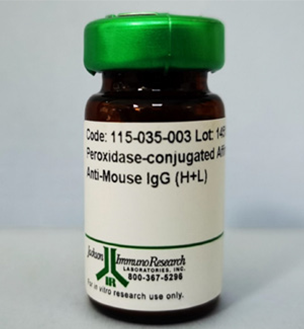
該Anti-Mouse P-Cadherin的詳細(xì)信息查看ReliaTech提供的產(chǎn)品說明書。溶解建議:Centrifuge vial prior to opening. Reconstitute the antibody with 500 μl sterile PBS and the final concentration is 200 μg/ml.