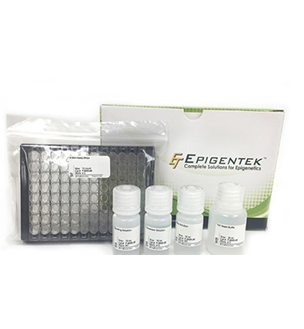
TNF-beta (TNF-b) is a protein of 171 amino acids in length and N-glycosylated at position 62.? Some cell lines secrete varying glycosylated forms of the factor that may differ also in their biological activities. The protein does not contain disulfide bonds and forms heteromers with LT-beta (Lymphotoxin-beta) that anchors the complexes in the membrane. TNF-b and TNF-a show ~30 percent sequence homology and bind to the same receptor, and murine and human TNF-bare highly homologous at 74 percent.?The biological functions of human TNF-b(hTNF-b) include promoting lymphoid development, enhancing normal host resistance to infection, and inhibiting growth of malignant tumors. Elevated hTNF-b levels are usually related to Crohn's Disease, multiple sclerosis, juvenile rheumatoid adrenoleucodystrophy, hypercalcemia of adult T cell leukemia, arthritis, bulbous pemphigoid, non-Hodgkin's lymphoma, and pregnancy. TNF-b is cytolytic or cytostatic for many tumor cells and acts as a mitogen for B-lymphocytes. TNF-b is also a chemo-attractant for neutrophils, increases phagocytosis, and increases adhesion to the endothelium. TNF-b promotes the proliferation of fibroblasts and is likely involved in the wound healing processes in vivo. TNF-b not only induces the synthesis of GM-CSF, G-CSF, IL-1, but also acts as an anti-angiogenesis factor. Hemorrhagic necrosis of tumors induced by TNF-b?in vivo is likely the result of an inhibition of the growth of endothelial cells. The TNF-b gene has a length of ~3kb and contains four exons. The gene maps to human chromosome 6p23-6q12, which is ~1.2kb apart from the TNF-a gene. The results obtained from the study of the TNF-b gene polymorphisms suggest that the gene may modify individual susceptibility to breast cancer in women.Intended Use:This Human TNF-b ELISA kit is to be used for the in vitro quantitative determination of human Tumor Necrosis Factor Beta (TNF-b) concentrations in serum, plasma, and cell culture supernatant.Sensitivity:<11pg/mlRange:11-8000pg/mlTest Principle:This TNF-β enzyme linked immunosorbent assay (ELISA) applies a technique called a quantitative sandwich immunoassay. The microtiter plate provided in this kit has been pre-coated with a monoclonal antibody specific to TNF-b. Standards or samples are then added to the appropriate microtiter plate wells and incubated. After washing to remove unbound TNF-b and other components of the sample, biotin-conjugated polyclonal antibody specific to TNF-b is added and incubated. If present, TNF-b will bind and become immobilized by the antibody pre-coated on the wells and then become “sandwiched” by the biotin conjugate. In order to quantitatively determine the amount of TNF-b present in the sample, Avidin conjugated to Horseradish Peroxidase (HRP) is added to each microplate well and incubated. Avidin is a tetramer containing four identical subunits, each having a high affinity-binding site for biotin. The wells are thoroughly washed to remove all unbound HRP-conjugated Avidin and a TMB (3,3'5,5' tetramethyl-benzidine) substrate solution is added to each well. The enzyme (HRP) and substrate are allowed to react over a short incubation period. Only those wells that contain TNF-b, biotin-conjugated antibody and enzyme-conjugated Avidin will exhibit a change in color. The enzyme-substrate reaction is terminated by the addition of a sulphuric acid solution and the color change is measured spectrophotometrically at a wavelength of 450nm ± 2nm.This kit includes two calibration diluents (Calibrator Diluent I for serum/plasma testing and Calibrator Diluent II for cell culture supernatant testing) in order to measure the concentration of TNF-b in the samples. According to the testing system, the standard provided is diluted (2-fold) with the appropriate Calibrator Diluent and assayed at the same time as the samples. This allows the operator to produce a standard curve of Optical Density (O.D) versus TNF-b concentration (pg/ml). The concentration of TNF-b in the samples is then determined by comparing the O.D. of the samples to the standard curve.Kit Components:TNf-b?MICROTITER PLATE?BIOTIN CONJUGATE?AVIDIN CONJUGATE?TNf-b?STANDARD??SERUM ASSAY BUFFER?CALIBRATOR DILUENT I?CALIBRATOR DILUENT II?WASH BUFFER (20X/96 wells, 30X/192 wells)??SUBSTRATE A??SUBSTRATE B??STOP SOLUTIONStorage and Stability:Store powder at 4°C liquid at -20°C. Store other components at 4°C. Stable for 6 months For maximum recovery of product, centrifuge the original vial after thawing and prior to removing the cap.