This primary antibody kit is designed to detect and quantify endogenous protein levels of human AKT1, AKT2 and AKT3. Each antibody is designed to recognize a specific isoform of AKT. AKT is a component of the PI-3 kinase pathway and is activated by phosphorylation at Ser 473 and Thr 308. AKT is a cytoplasmic protein also known as Protein Kinase B (PKB) and rac (related to A and C kinases). AKT is a key regulator of many signal transduction pathways. AKT Exhibits tight control over cell proliferation and cell viability. Overexpression or inappropriate activation of AKT is noted in many types of cancer. AKT mediates many of the downstream events of PI 3-kinase (a lipid kinase activated by growth factors, cytokines and insulin). PI 3-kinase recruits AKT to the membrane, where it is activated by PDK1 phosphorylation. Once phosphorylated, AKT dissociates from the membrane and phosphorylates targets in the cytoplasm and the cell nucleus. AKT has two main roles: (i) inhibition of apoptosis; (ii) promotion of proliferation. Anti-AKT Antibodies are ideal for investigators involved in Cell Signaling, Neuroscience and Signal Transduction research.
產(chǎn)品描述
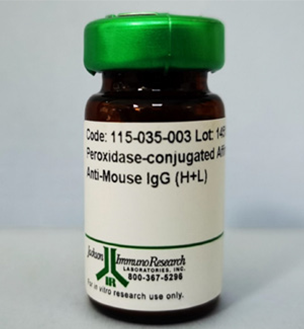
Anti-AKT Antibodies are suitable for ELISA, immunohistochemistry, and western blotting. Expect a band approximately 56 kDa in size corresponding to AKT proteins by western blotting in the appropriate cell lysate or extract. All 3 primary monoclonal antibodies reacts with human AKT. Specific conditions for reactivity should be optimized by the end user. For immunohistochemistry we recommend the use of fresh frozen tissues. Attempts at staining paraffin-embedded formalin fixed tissues were negative. No pre-treatment of sample is required. This sampler kit consists of sample sizes of anti-AKT1, anti-AKT2 and anti-AKT3 mouse monoclonal antibody and HRP conjugated anti-Mouse IgG secondary antibody (p/n 200-301-I51S; 200-301-BR8S; 200-301-J36S and 610-403-C46S, respectively).
Each vial contains a relatively low volume of reagent (25 μL). Store vial at -20° C or below prior to opening. To minimize loss of volume dilute 1:10 by adding 225 μL of the buffer stated above directly to the vial. Recap, mix thoroughly and briefly centrifuge to collect the volume at the bottom of the vial. Use this intermediate dilution when calculating final dilutions as recommended below. Store the vial at -20°C or below after dilution. Avoid cycles of freezing and thawing.