- 中文名稱
MAPK14 ELISA試劑盒 (Rat)
- 英文名字
- MAPK14 ELISA Kit (Rat)
- 供應(yīng)商
- Aviva Systems Biology
- 產(chǎn)品貨號(hào)
- aviva-OKCD02630-96W
- 產(chǎn)品報(bào)價(jià)
- ¥詢價(jià)/96Wells

- 產(chǎn)品說明書
- 點(diǎn)擊查看
- 購買方式
- 銀行轉(zhuǎn)賬、電匯、支票、現(xiàn)金,在線支付寶及網(wǎng)銀支付,或直接與我們電話聯(lián)系。本公司所有產(chǎn)品僅供科研使用,不用于臨床診斷。
- 產(chǎn)品新聞

- 背景資料
- Serine/threonine kinase which acts as an essential component of the MAP kinase signal transduction pathway. MAPK14 is one of the four p38 MAPKs which play an important role in the cascades of cellular responses evoked by extracellular stimuli such as proinflammatory cytokines or physical stress leading to direct activation of transcription factors. Accordingly, p38 MAPKs phosphorylate a broad range of proteins and it has been estimated that they may have approximately 200 to 300 substrates each. Some of the targets are downstream kinases which are activated through phosphorylation and further phosphorylate additional targets. RPS6KA5/MSK1 and RPS6KA4/MSK2 can directly phosphorylate and activate transcription factors such as CREB1, ATF1, the NF-kappa-B isoform RELA/NFKB3, STAT1 and STAT3, but can also phosphorylate histone H3 and the nucleosomal protein HMGN1. RPS6KA5/MSK1 and RPS6KA4/MSK2 play important roles in the rapid induction of immediate-early genes in response to stress or mitogenic stimuli, either by inducing chromatin remodeling or by recruiting the transcription machinery. On the other hand, two other kinase targets, MAPKAPK2/MK2 and MAPKAPK3/MK3, participate in the control of gene expression mostly at the post-transcriptional level, by phosphorylating ZFP36 (tristetraprolin) and ELAVL1, and by regulating EEF2K, which is important for the elongation of mRNA during translation. MKNK1/MNK1 and MKNK2/MNK2, two other kinases activated by p38 MAPKs, regulate protein synthesis by phosphorylating the initiation factor EIF4E2. MAPK14 interacts also with casein kinase II, leading to its activation through autophosphorylation and further phosphorylation of TP53/p53. In the cytoplasm, the p38 MAPK pathway is an important regulator of protein turnover. For example, CFLAR is an inhibitor of TNF-induced apoptosis whose proteasome-mediated degradation is regulated by p38 MAPK phosphorylation. In a similar way, MAPK14 phosphorylates the ubiquitin ligase SIAH2, regulating its activity towards EGLN3. MAPK14 may also inhibit the lysosomal degradation pathway of autophagy by interfering with the intracellular trafficking of the transmembrane protein ATG9. Another function of MAPK14 is to regulate the endocytosis of membrane receptors by different mechanisms that impinge on the small GTPase RAB5A. In addition, clathrin-mediated EGFR internalization induced by inflammatory cytokines and UV irradiation depends on MAPK14-mediated phosphorylation of EGFR itself as well as of RAB5A effectors. Ectodomain shedding of transmembrane proteins is regulated by p38 MAPKs as well. In response to inflammatory stimuli, p38 MAPKs phosphorylate the membrane-associated metalloprotease ADAM17. Such phosphorylation is required for ADAM17-mediated ectodomain shedding of TGF-alpha family ligands, which results in the activation of EGFR signaling and cell proliferation. Another p38 MAPK substrate is FGFR1. FGFR1 can be translocated from the extracellular space into the cytosol and nucleus of target cells, and regulates processes such as rRNA synthesis and cell growth. FGFR1 translocation requires p38 MAPK activation. In the nucleus, many transcription factors are phosphorylated and activated by p38 MAPKs in response to different stimuli. Classical examples include ATF1, ATF2, ATF6, ELK1, PTPRH, DDIT3, TP53/p53 and MEF2C and MEF2A. The p38 MAPKs are emerging as important modulators of gene expression by regulating chromatin modifiers and remodelers. The promoters of several genes involved in the inflammatory response, such as IL6, IL8 and IL12B, display a p38 MAPK-dependent enrichment of histone H3 phosphorylation on 'Ser-10' (H3S10ph) in LPS-stimulated myeloid cells. This phosphorylation enhances the accessibility of the cryptic NF-kappa-B-binding sites marking promoters for increased NF-kappa-B recruitment. Phosphorylates CDC25B and CDC25C which is required for binding to 14-3-3 proteins and leads to initiation of a G2 delay after ultraviolet radiation. Phosphorylates TIAR following DNA damage, releasing TIAR from GADD45A mRNA and preventing mRNA degradation. The p38 MAPKs may also have kinase-independent roles, which are thought to be due to the binding to targets in the absence of phosphorylation. Protein O-Glc-N-acylation catalyzed by the OGT is regulated by MAPK14, and, although OGT does not seem to be phosphorylated by MAPK14, their interaction increases upon MAPK14 activation induced by glucose deprivation. This interaction may regulate OGT activity by recruiting it to specific targets such as neurofilament H, stimulating its O-Glc-N-acylation. Required in mid-fetal development for the growth of embryo-derived blood vessels in the labyrinth layer of the placenta. Also plays an essential role in developmental and stress-induced erythropoiesis, through regulation of EPO gene expression. Phosphorylates S100A9 at 'Thr-113' (By similarity).
- 產(chǎn)品描述
- 該MAPK14 ELISA Kit (Rat)的產(chǎn)品描述請參考該產(chǎn)品的說明書
- 產(chǎn)品特點(diǎn)
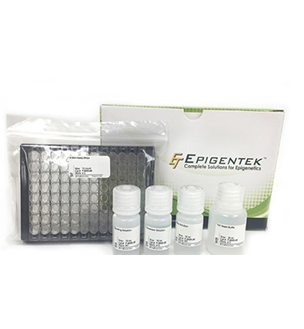
- ELISA試劑盒
- 保存建議
- 2°C to 8°C|-20°C
- 其他
- Aviva Systems Biology總部位于加利福尼亞州圣迭戈,在中國北京設(shè)有辦公室,專注于為研究需求提供多克隆和單克隆抗體、ELISA試劑盒、蛋白質(zhì)和定制服務(wù)。Aviva Systems Biology生產(chǎn)了24,000種經(jīng)過驗(yàn)證的多克隆抗體,并提供近20,000種ELISA試劑盒,定制實(shí)驗(yàn)室服務(wù)包括蛋白表達(dá)和純化、抗體開發(fā),以及ELISA的開發(fā)、驗(yàn)證和生產(chǎn)。Aviva Systems Biology為與獨(dú)特物種和靶標(biāo)相關(guān)的研究提供獨(dú)特工具,研究領(lǐng)域包括轉(zhuǎn)錄因子、癌癥、心血管、細(xì)胞生物學(xué)、DNA損傷和修復(fù)、表觀遺傳學(xué)、信號(hào)轉(zhuǎn)導(dǎo)、細(xì)胞分化、干細(xì)胞生物學(xué)等等。
-

- 注意
-
該頁面的中文產(chǎn)品信息的翻譯,僅供參考。準(zhǔn)確的產(chǎn)品信息請以廠家的英文說明書為準(zhǔn)。下單前,請瀏覽說明書確認(rèn)。
-